There’s a recurring nightmare I had when I was a child that started not long after I began swimming lessons. I fall into a white-tiled indoor pool, with a vaulted ceiling above me. The pool starts empty, but it slowly fills with water. There are no ladders, and the edge of the pool rises with the water level: I can never reach the edge high above me. The white tiles gleam with reflected light, the splashes of the water echoing. It’s a consuming, swallowing void, made scarier by everything being sharply lit rather than dark and hidden.
It was a strange, powerful fear that I remembered long after my swimming lessons ended. I was fascinated by the unique balance of bright lights and sinking depths, and found it put me in a uniquely creative headspace the older I got. Certain music, movies and TV shows could occasionally evoke the gleaming neon horror of that nightmare – I can’t count the number of times I listened to Enigma’s album The Screen Behind the Mirror to recapture that feeling. I channeled that feeling into writing, into working, into exercise. I think I realised as an adult that the fear became manageable, but useful for its affect: you realise you can float above the water, no matter how high it rises, and maintain a sense of control over the fear.
ECHO is a video game that captures my strange swimming pool nightmare sensation perfectly.
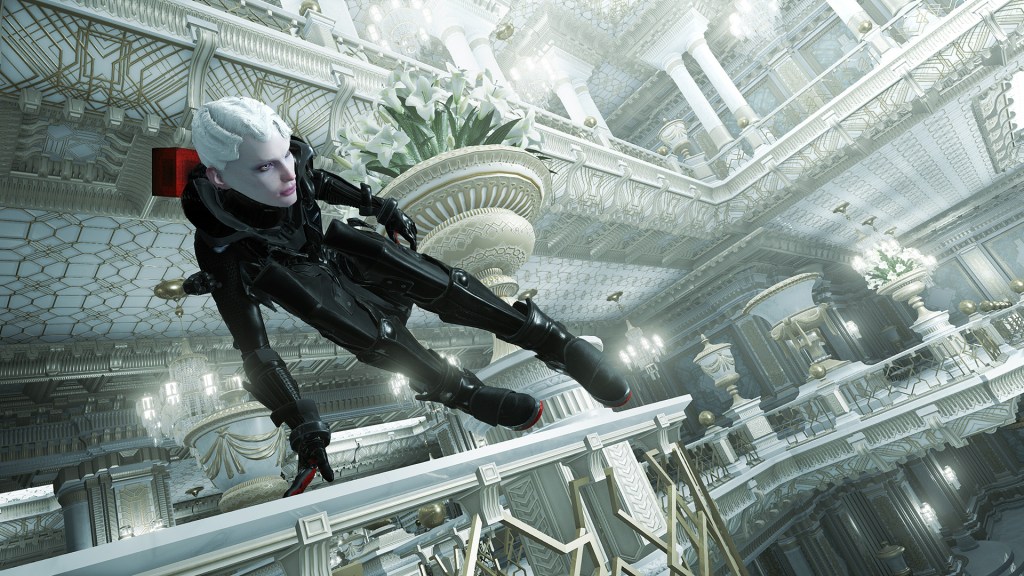
I’m willing to bet almost anyone reading this blog won’t have heard of it, but ECHO has had a profound effect on me. It’s a cheap independent game by the (sadly now-defunct) Danish studio Ultra Ultra, available for PC and Playstation 4. I picked it up on a whim to play through with my wife, who likes to watch video game stories while I pilot the main character. We finished it recently, and from beginning to end, the game – and its evocation of the swimming pool nightmare – ensnared me.
You play as En, a young woman bred from birth as a Resourceful. In a gleaming sci-fi future, Resourcefuls are trained to enter the Palace, an ornate, planet-sized chateau with the ability to grant godlike powers to whomever reaches the end of its maze of challenges. En ventures to the Palace depths to restore the life of her friend, Foster, with the help of an irascible AI named London. Upon entering the Palace, En is beset by clones of herself that adapt to the player’s moves: if you sprint, shoot, punch or vault across railings, the clones learn how to do that, too. Intermittently, the Palace experiences Blackouts where En can use any move without the clones learning it.
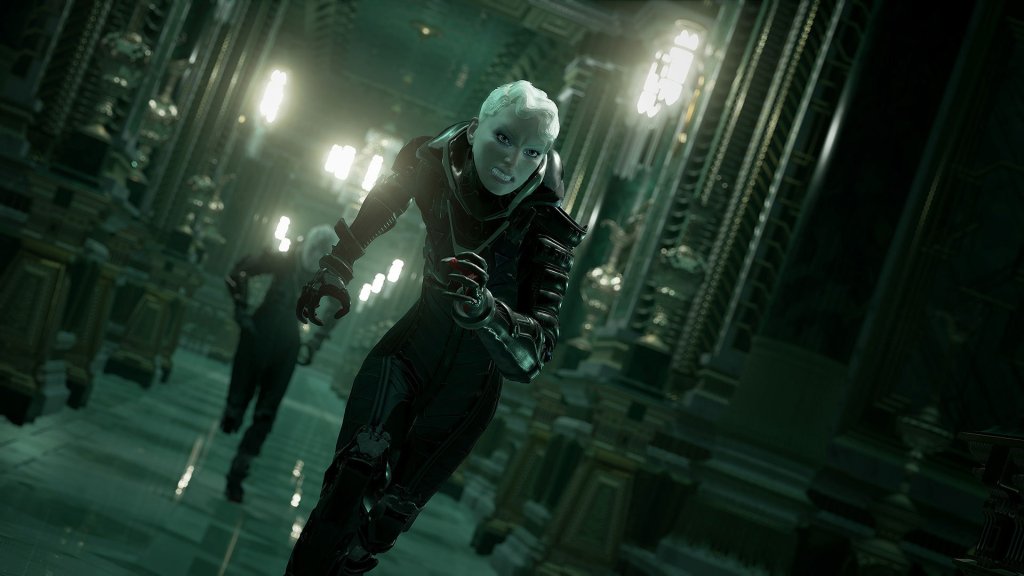
Best described as a stealth puzzle game, ECHO’s gameplay is solid once you get the hang of it. Where it shines, and where it particularly grabbed me, is through its story and atmosphere, which are, in a word, sublime.
There is no way an indie game from an 8-person studio in Denmark has narrative and aesthetics that are this good. En is a compelling character, and her banter with London – starting as sardonic and getting standoffish, furious and supportive over the course of the game – is a two-person play. The story is surprisingly deep, delivered mainly through En and London duologues and touching on themes of heritage, fate and self-determination. And, good God, does the game look gorgeous.
Just look at the environments in that trailer. The Palace is a grand, gleaming, seemingly-endless monolith, beginning as a Versailles-inspired manor and shifting through Turkish baths, vibrant green dining halls, obsidian mausoleums and golden cathedrals throughout the game. It contrasts with the exterior environments, cold black steel and inches-deep snow with the occasional spot of dystopian rain. The aural design fuses with the visuals to create a chronotopic time and place, the music and soundscapes reverberating within these vast, alienating, desolate halls of magnificent emptiness. It’s a space of hollow grandeur, brightly-lit and overwhelming. Just like the slowly-filling nightmare swimming pool.
A big chunk of why I like ECHO is undoubtedly the resemblance it has to the pool, the water and the shining white tiles. It’s not a horror game, strictly speaking, but it ends up on some scary game lists. The fear becomes manageable once you learn how the clones and the Blackouts work, affording you a sense of control over the immensity of the Palace’s nightmarish puzzles – once you learn to float atop the water of the pool. There aren’t many things that properly embody this bad dream for me, but when I find them I end up loving the revival of the nightmare all the same. Like the music of Enigma, the comic book series East of West and the ending scene of 2001: A Space Odyssey, ECHO taps into my very specific phantasm through its grandiose aesthetic and cerebral story. It’s a game I won’t forget anytime soon.


![We need to stop saying “[new show] is like Game of Thrones”](https://livesonscreen.com/wp-content/uploads/2024/11/thrones-1.webp?w=1024)


 Lives On Screen
Leave a reply to Musing on Mouthwashing – Lives On Screen Cancel reply