
TRIGGER WARNING: Sections of this article discuss potentially triggering topics around self-harm, depression and sexual assault. Reader discretion is advised.
I’ve never been a horror fan but I love gaming, and my wife loves horror but doesn’t consider herself a gamer. It’s a perfect marriage (I mean, for other reasons too, but still).
The arrangement goes thus: we find horror games that pique her interest, and I’m the poor sod who picks up the controller for eight hours of sweaty-palmed, jump-scaring, prickled skin “fun” while she watches. More often than not things devolve into her “helpfully” giving instructions (“Run faster! Open the door! Don’t let the monster kill you!” etc) while I madly mash buttons before our character inevitably meets their mortality. While I’m the one on the verge of arrhythmia with shaking hands and a throat hoarse from screaming, it’s apparently just as stressful for her to witness all of this.
I can honestly say the experiences we’ve had with horror games have broadened my pallet in the best way. Over the past eight or so years since we started our little horror game double act we’ve experienced numerous classics (Resident Evil VII, SOMA, the Amnesia games, ECHO and many others) and clunkers (thankfully fewer, but Maid of Sker and Remothered: Tormented Fathers spring quickest to mind). Like Wesley gaining immunity to iocaine powder through exposure in The Princess Bride, I’m now seeking out more horror games both to challenge myself and to experience the unease, disgust and outright terror that the genre can offer.
All this is to say that without my wife’s coaxing into a genre I’d not have touched with a bargepole, I never would have played Mouthwashing: one of the single most depressing, tortuous, harrowing and overwhelmingly bleak games I’ve ever played. And I was riveted for every second of it.
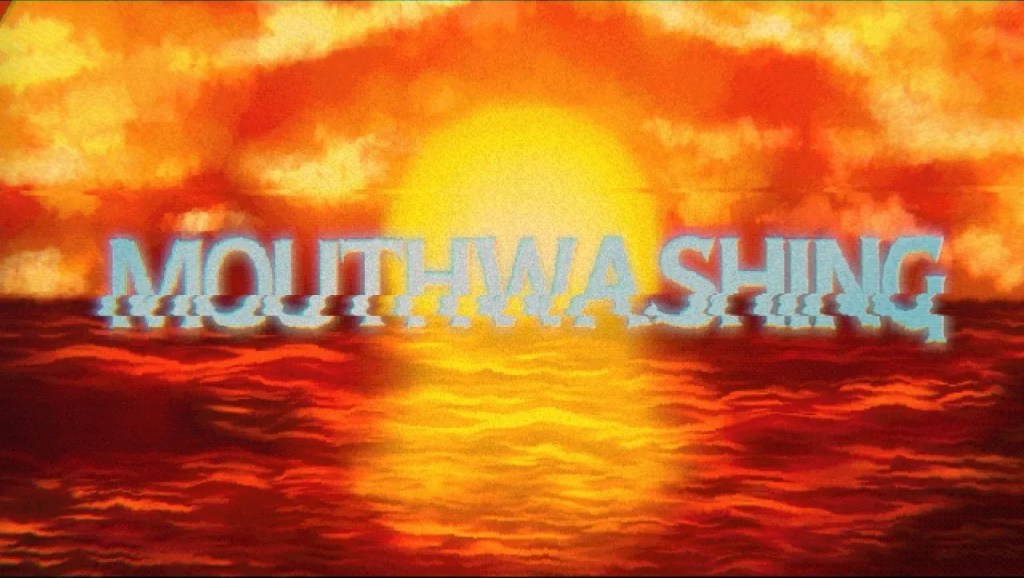
Before I go further I need to bifurcate the rest of this piece into the non-spoilery and the spoilery, because I want to talk about both. Dave and I will also do an episode on our podcast Slice of Cherry Guys in the near future. I would suggest you give the game a go with as little knowledge as possible. Otherwise…
Take Responsibility: The Non-Spoilery Section
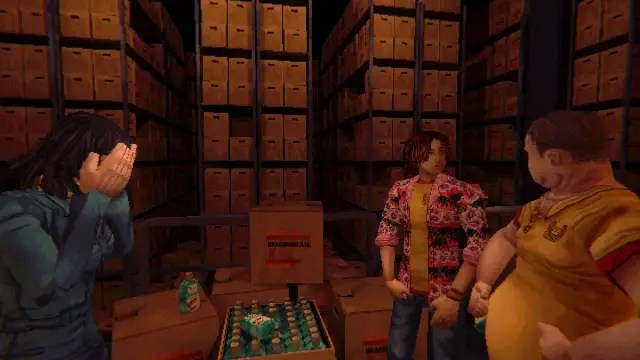
Developed by Swedish studio Wrong Organ and published by indie label CRITICAL REFLEX, Mouthwashing tells the story of five crew members stranded aboard a crashed space freighter hauling metric tons of – what else? – mouthwash. With no rescue coming from their corporate masters who’ve recently gone bankrupt, the crew survive as best they can while their situation gradually deteriorates. You play in first-person sections alternately as freighter captain Curly (before the crash) and his best friend Jimmy (after the crash) with the story presented non-linearly as you navigate the freighter, speak with the crew and get to the bottom of who is ultimately responsible for the crash. All told, the game takes around 2-3 hours to complete.
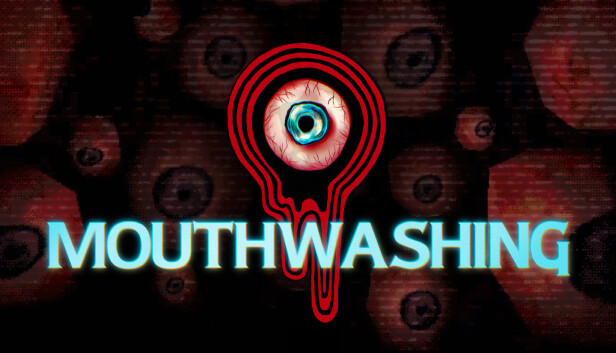
The first way Mouthwashing hooks you is its marketing, specifically the launch trailer:
You’d think that with the advert-style mouthwash product placement intercut with giant eyeballs and tense music means you’re in for a potentially satirical horror take on corporate capitalism. While that certainly happens, it’s only the crusty sugar top layer of the disturbing creme brulée that lies beneath.
Mouthwashing is a horror game primarily centred on the development of its doomed characters. While they’re all equally damned by the yoke of capitalism condemning them to a slow, lingering death in deep space while trapped with a truckload of teeth cleaner, the issues plaguing them go far beyond that. Aimless intern Daisuke is looking for some direction and motivation, trapped on the freighter only thanks to his parents taking control of his life. Grumpy engineer Swansea is Star Trek‘s Scotty by way of South Park‘s Randy Marsh, a mechanical genius with an alcoholic past. Anxious nurse Anya is grappling with deteriorating mental states for both herself and the crew. First mate Jimmy is a rough-edged recent hire who’s hoping to find the success afforded to his friend, ship’s captain and voice of reason Curly. As the game progresses each of their arcs subtly hint at bigger pictures for their lives outside of the ship, the metaphorical weights around their ankles that stop them from achieving joy, and the realisation that this broken metal box crammed with corporate cleanser could be their tomb.
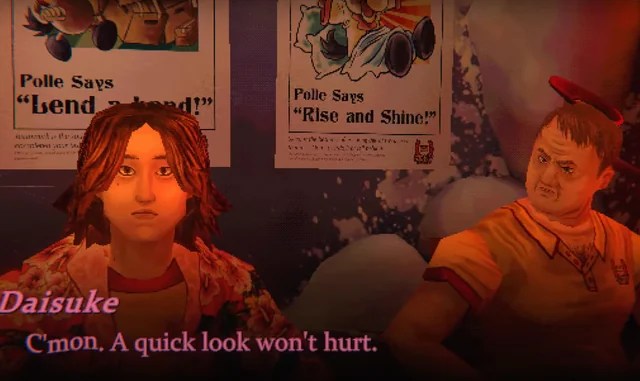
In exploring these characters the player is subjected to a surreal journey of pathos, delirium and judgment. The PS1-era graphics create a sense of lo-fi unease, hearkening back to horror genre classics like Silent Hill and Resident Evil. Coupled with this are sections where reality distorts and the ship becomes a David Lynch-esque site of the uncanny; doors lead to endless corridors, music slows and becomes more menacing, a corporate mascot grows one too many heads, and the characters’ inevitable march towards insanity continues apace.
As their journeys each reach a climax, Mouthwashing shows its hand as a horror game fixated upon the rot at the heart of humanity. The crew’s corporate overlords might be big-picture bad guys responsible for their trucking mouthwash into deep space beyond rescue, but the true villainy at work is right in front of the crew themselves.
So with that in mind, and with a hearty endorsement from me to once again play this without spoilers if you can, let’s talk about…
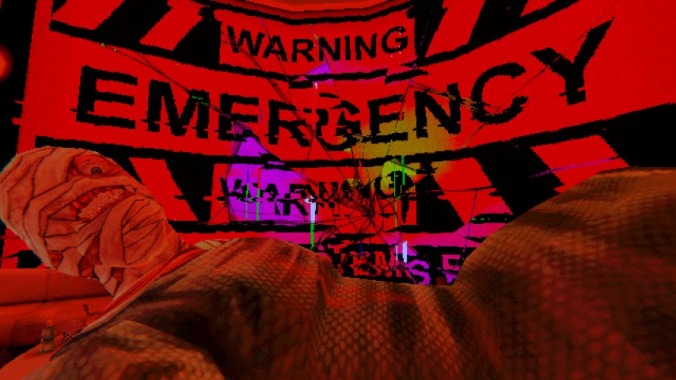
I hope this hurts: The SPOILERY section
Seriously, lots of spoilers. Turn back now.
I mean it. I’m about to spoil the ending.
Because it’s the ending, where the evil that men do – or, that one in particular does – escapes judgment, that clinched this game for me as a macabre masterpiece.
The crew’s subtle hints that things aren’t ok are most troubling with nurse Anya. At once concerned about the lack of locks on the crew quarter doors (with only the medical bay locked, for “safety” reasons) and lamenting there being only one gun on the ship (only available for the captain’s use), Anya reveals she is pregnant. Jimmy is the father and the very strong implication is that their encounters are non-consensual. Upon learning this, Jimmy does not take responsibility for his actions and instead tries to crash the ship to solve the problem permanently.
As a result, the crew unravels. Anya takes her own life through an overdose. Swansea falls off the wagon, abandoning sobriety via the mouthwash’s 14% ethanol content. He is also forced to euthanise Daisuke, the bright-eyed intern subjected to yet another person giving his life direction – in this case, Jimmy ordering him into a dangerous air vent which mortally wounds him. Horrifically maimed and mutilated both by the crash itself and the reluctant ministrations of Jimmy as caregiver, Curly can only watch with his remaining, unblinking eye as everything slides towards oblivion (and that’s before we get into the “feeding” minigame near the end – if you know, you know).
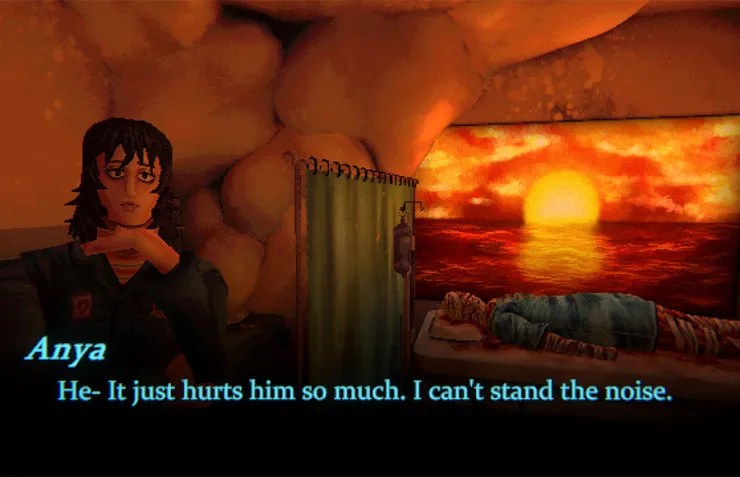
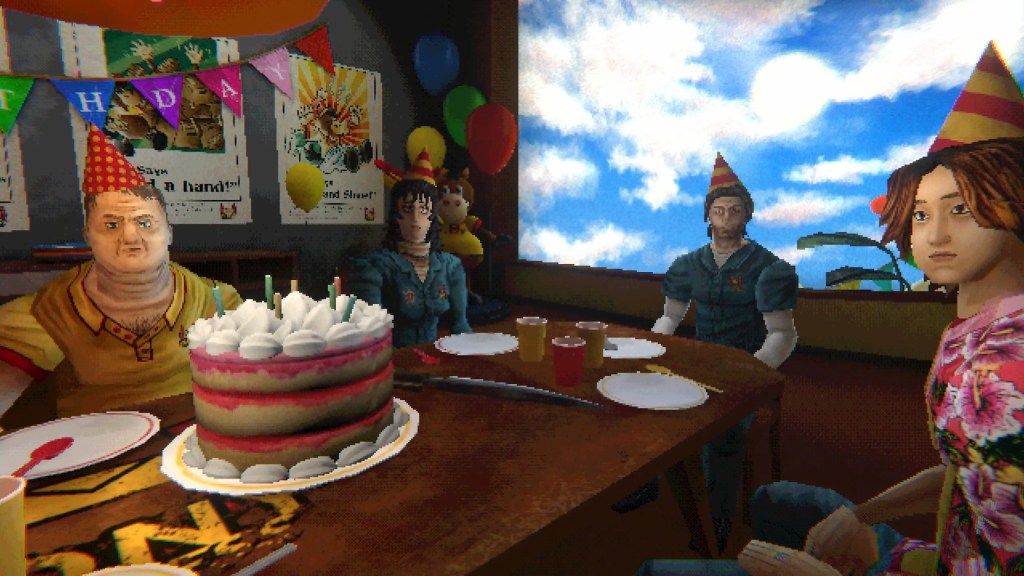
There is a parallel world where Mouthwashing gets off easy with this kind of moral and mortal deterioriation. You’d think the mouthwash itself would drive the crew to madness after so many months in isolation. Indeed, the game’s marketing approach suggests the mouthwash to be some Black Mirror-esque corporate snake oil that induces insanity. Upon finding the cargo hold full of the stuff, Anya observes that the sugar content in the mouthwash would increase bacterial growth, nullifying it as a possible cleaner and setting it up to be a source of potentially-literal brain rot. Coupled with the game’s messaging about the soulless, empathetic vacancy of big companies – embodied by the space trucking company Pony Express, who only provide ingredients for one communal birthday cake enabled by a captain-only keycode on the food dispenser – there was potential for the game to locate horror squarely within the corrupt core of capitalism. The horror would then become cautionary, incited by external influence that unbalances a man by accentuating his faults.
For example, Jimmy’s ordering Daisuke into the clear danger of the air vent that leads to his death could just be irrationality that’s been egged on by evil corporate mouthwash. Jimmy is shown by this point to be acting as a leader out of attempts to selfishly overcome his personal inadequacies rather than out of the altruism and trust that made Curly a respected captain. The mouthwash could have accentuated this approach; Jimmy was already a bad leader but the 14% ethanol he’s been sculling could have made him worse. It’s a version of The Mighty Boosh‘s Milky Joe episode played for drama. That kind of story could have worked, and it could have been good.
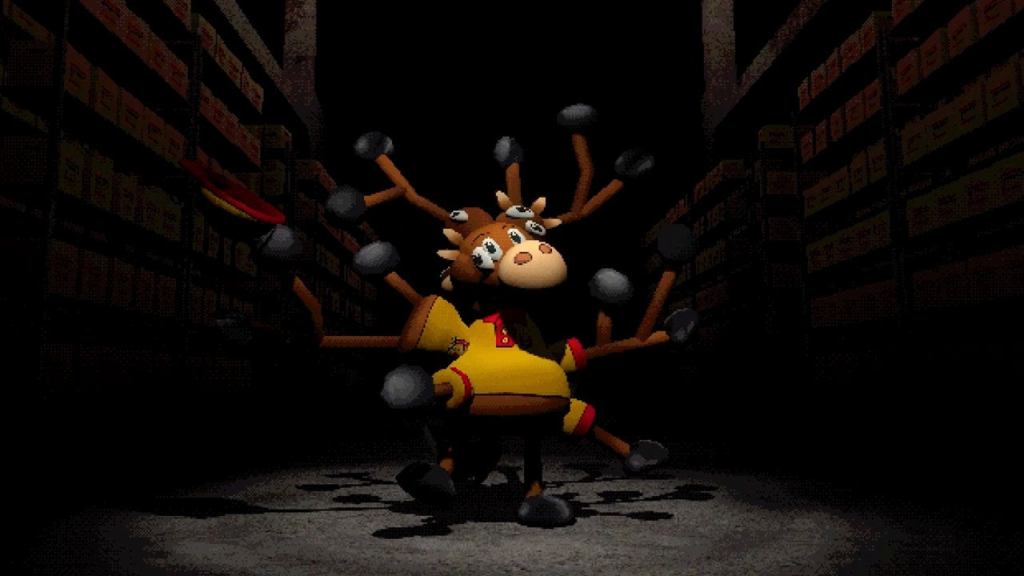
But what distinguishes Mouthwashing as a truly great story is its refusal to shift blame away from a rotten human heart beyond redemption, consumed by narcissism and male ego. Outside of reigniting Swansea’s alcoholism, the mouthwash itself is incidental to the horrors on-screen. Jimmy commits horrific crimes because there is a darkness within him that cannot be reconciled or explained away as being triggered by being stuck on the freighter for months. He sexually assaults Anya long before the crash, he openly challenges Curly’s leadership in front of the crew upon learning of Pony Express’s demise, and he steers the ship into the asteroid’s path without the convenience of mouthwash influence as a scapegoat. He is a wastrel lacking in self-reflexivity who instinctually ducks blame and – as the game often literally displays the words on-screen – does not take responsibility for his actions.
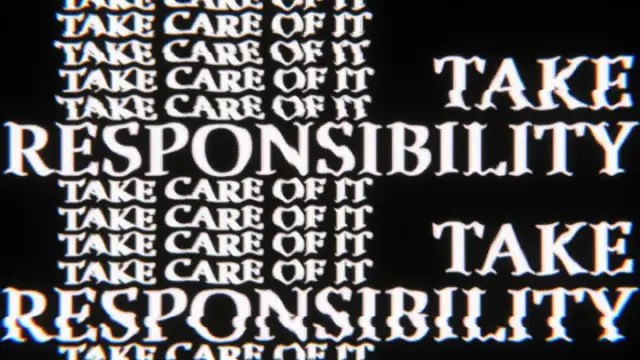
As the final masterstroke, Mouthwashing doesn’t let Jimmy off the hook. Towards the end he realises his mistakes and apologises to Curly. He appears regretful that his actions caused death, torment and pain. For a moment the game appears set to end with Jimmy attempting to redeem himself through self-realisation and an act of sacrifice in putting Curly in the last working cryo-pod, giving him a chance at surviving in 20 years’ time. But at each turn Jimmy’s efforts at mea culpa get shot down. The game does not forgive him and there is no act that can restore his soul. Swansea makes it clear that, with the crew dead and Curly rendered mute, anything Jimmy does could easily paint him as a hero undeserving of praise if rescue does come. With Pony Express now defunct and the chance of that rescue being slim, Curly has likely been condemned to a prolonged death 20 years from now when the cryo pod opens and no-one’s there to care for him. Even the player is incited to see Jimmy as deserving of torment in the face of attempted redemption; there is an Achievement, ironically titled “The Good Ending”, for allowing Jimmy to be mauled by Swansea’s axe ten times during a hallucinatory chase through a graveyard.
This all leads to the downer ending with Curly trapped for decades in a cryo pod and Jimmy using the captain’s gun to end his own life, arguably escaping any consequences or judgment for his actions. There is no light at the end and no sci-fi explanation for the twisted ego that led to the doom of these people. There is just bleak reality.
It’s rare for a horror game to effectively double down on a gloomy outcome without stepping over the line into exploitative and depressing torture porn. Where games like Outlast, Scorn and The Evil Within delight in sadistically abusing and mutilating characters for shock value, Mouthwashing hammers home the cause and effect of selfish evil leading to long suffering with realistic outcomes. A lot of that is thanks to the horror being earned and explainable. Some of Jimmy’s egocentricism comes from understandable places of inadequacy and emotional dysfunction – but again, not so much that it makes him sympathetic – and the crew’s respective issues spawn from grounded human foibles. The weirdness of the hallucinatory horror elements and nightmare sequences metaphorically stems from the reality grinding the crew down. In Jimmy’s case, the internalisation of his horrific assault of Anya manifests as constant, distorted cries of a newborn, and a centipede made out of corporate mascot statues birthed from a womb-like orifice with giant eyeballs. In contrast to Wrong Organ’s previous game, the free-to-play and extraordinarily strange How Fish Is Made, everything that’s down and dour about Mouthwashing has rationale behind it (though I do recommend playing Fish because it is, as I said, extraordinarily strange). Thanks to the game’s short length of 2-3 hours, it also doesn’t outstay its welcome.
The result is a fascinating odyssey into ennui, despair and madness. Mouthwashing is easily one of the best and most engrossing games I’ve played this year, and a horror genre instant classic that deserves a lot more exposure and playtime. It tackles incredibly heavy themes and confronting subject matter with an unflinching approach, unafraid to render humanity as monstrous.
Throughout the game, Anya argues that a person is not defined by their worst moments. Mouthwashing, by contrast, is defined by the way it shows us those moments.

![We need to stop saying “[new show] is like Game of Thrones”](https://livesonscreen.com/wp-content/uploads/2024/11/thrones-1.webp?w=1024)


 Lives On Screen
Leave a comment